

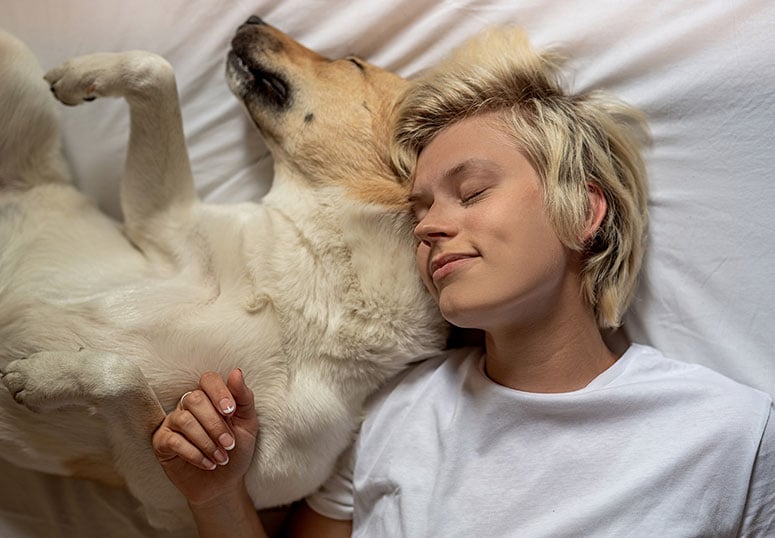
If you’ve ever been jolted awake at 2:47 a.m. by your dog’s midnight monologue or your cat’s hallway Olympics, you’re not alone. While humans are busy chasing REM cycles, many pets seem to operate on their own chaotic circadian schedule—one that rarely includes letting their owners sleep in peace.
Welcome to the overnight saga of bark, snore, repeat.
But here’s the good news: whether it’s anxious pacing, erratic zoomies, or nighttime whining, there are ways to help your furry friend settle into a more snooze-friendly routine—and reclaim your own shut-eye in the process.
Why Your Pet’s Not Sleeping (And You Aren’t Either)
Unlike humans, pets don’t need eight uninterrupted hours of sleep. They nap throughout the day, and while that might sound like a dream life, it can wreak havoc on their nighttime routine.
Here are a few common culprits behind nocturnal mischief:
- Separation anxiety: Pets miss you when the lights go out.
- Pent-up energy: Too many naps, not enough playtime.
- Discomfort or age-related pain: Especially in senior pets or those with joint issues.
- Environmental factors: Sudden noises, lights, or even a missed meal can disrupt their night.
- Confusion in older pets: Cognitive dysfunction can cause nighttime restlessness.
Steps to a Snooze-Approved Pet Routine
Before you dive into sleep aids, it’s important to tweak your pet’s routine first. Think of it like toddler sleep training—but with more fur and fewer tantrums (hopefully).
🕗 1. Establish a Predictable Schedule
Pets thrive on routine. Feed and walk them at the same times daily. Save the biggest exercise session for the evening to help burn off extra energy.
💡 2. Create a Bedtime Wind-Down Ritual
Soothing activities like gentle brushing, dim lighting, or quiet music can cue your pet that it’s time to settle down.
🧸 3. Comfort Matters
Ensure your pet has a cozy, safe space—ideally separate from foot traffic or noises. For anxious pets, a crate with a blanket can feel like a calm den.
When Routine Isn’t Enough: Consider Natural Calming Support
If you’ve optimized your pet’s schedule and they’re still channeling their inner night owl, it may be time for natural support. That’s where CBD for Pets enters the chat—without turning your dog into a couch potato.
CBD works by interacting with your pet’s endocannabinoid system, which helps regulate mood, anxiety, and yes—sleep. Unlike sedatives, it doesn’t knock them out but promotes a sense of calm that helps them stay settled through the night.
Benefits for nighttime use:
- Reduces restlessness or pacing
- Calms separation anxiety
- Eases joint discomfort that can disrupt sleep
- Helps establish a consistent sleep cycle
The key? Use it consistently and start with the right dosage (always check with your vet first, especially if your pet has existing health conditions).
Sleep: A Family Affair
When your pet sleeps better, so do you. No more surprise howls. No more feline furniture parkour. Just a quiet house and a deeper sleep—for both of you.
Here’s what better sleep can do:
- Improve your pet’s mood and immunity
- Reduce destructive behavior caused by fatigue
- Improve your own focus and patience as a pet parent
In the end, it’s not just about catching zzz’s—it’s about quality of life.
Final Thoughts: Less Wiggle, More Wigwam
Helping your pet sleep better doesn’t mean surrendering to 4 a.m. playtime or investing in blackout curtains and soundproof walls. With consistent routines, a calming environment, and a little natural help where needed, you can both drift off without drama.
Because the only thing cuter than your pet wagging their tail? Your pet curled up in bed, blissfully quiet, letting you sleep like you used to before you had a furry roommate with insomnia.
