

Key Takeaways
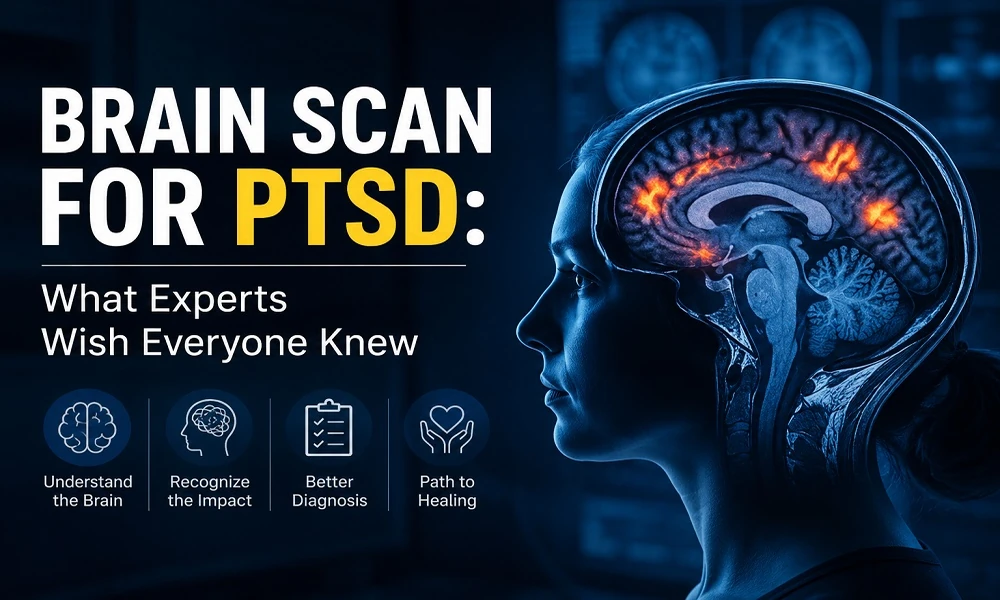
Brain scans are changing the way PTSD is diagnosed. By visualizing brain activity and pinpointing trauma-related patterns through techniques like fMRI and PET scans, professionals gain significant insights.
Neuroimaging uncovers distinct physiological markers for PTSD, including increased amygdala activity and reduced prefrontal cortex function. This allows for much more accurate diagnoses.
When tailored treatment plans incorporate findings from neuroimaging, there can be marked improvements in PTSD symptoms, as they directly address specific brain dysfunctions.
Patients often feel validated when they visualize changes in their brain, which strengthens their relationship with care providers and boosts their involvement in treatment.
While brain scans are safe and non-invasive, they should complement traditional clinical assessments rather than replace them, to ensure effective outcomes.
Emerging technologies like AI and machine learning are set to revolutionize PTSD treatment by enabling quicker diagnoses and personalized treatment strategies based on comprehensive data analysis.
The horizon for PTSD therapy looks promising. Emerging technologies are expected to enhance understanding and transform treatment effectiveness through innovative data integration.
How Brain Scans Are Revolutionizing PTSD Diagnosis
The Science Behind Brain Imaging Techniques
Diving into the complexities of the human brain often requires more than just interviews and questionnaires. Experts note that brain scans are paving new paths in understanding post-traumatic stress disorder (PTSD). Techniques such as functional magnetic resonance imaging (fMRI) and positron emission tomography (PET) enable professionals to visualize brain activity and identify trauma-associated patterns.
These imaging methods have significantly upgraded traditional diagnostic practices. Rather than depending entirely on subjective symptom reports, imaging gives a physiological perspective, leading to more accurate diagnoses. It highlights individual variances in brain function, thus opening the door for tailored interventions. The intricate nature of PTSD is becoming increasingly transparent.
Interestingly, research indicates that trauma can create unique markers in the brain. Regions responsible for stress responses, like the amygdala, often present heightened activity levels in those suffering from PTSD. Recognizing this factor can enhance the quality of treatment models.
Key Findings from Recent Neuroimaging Studies
Recent studies have unveiled substantial insights on trauma exposure and its link to PTSD. For instance, research demonstrates changes in brain structures related to emotional regulation. Clients with PTSD may show lower activity in the prefrontal cortex, which is critical for moderating anxiety and fear responses.
A meta-analysis involving various neuroscientific teams communicates how different trauma types affect distinct brain regions. Findings indicate that veterans, survivors of sexual assault, and individuals experiencing childhood trauma exhibit diverse neurobiological responses.
The results imply that customized treatment plans could greatly benefit from the integration of neuroimaging findings.
These studies emphasize that a brain scan for PTSD not only visualizes brain activity but also facilitates the progression towards precision medicine in mental health.
Unpacking the Benefits of Brain Scans for PTSD Treatment
How Imaging Impacts Tailored Treatment Plans
Many clients report that insights gained from brain scans significantly enhance their treatment experiences. Instead of employing a generic strategy, healthcare providers can formulate highly personalized plans. When brain functions are thoroughly mapped, specialists can choose interventions that specifically target dysfunctions.
This level of precision often leads to quicker symptom relief. For instance, if imaging reveals an overactive amygdala, professionals might recommend cognitive behavioral therapy focused on managing anxiety. This direct approach not only aids clients but also fosters hope as they begin to notice tangible changes.
- Targeted therapies: Utilizing neuroimaging data, specialists can concentrate on effective therapies tailored to each patient’s individual needs.
- Informed medication management: Brain scans offer valuable insights into how patients metabolize medications, allowing for improved pharmaceutical choices.
- Early intervention: Identifying PTSD indicators via imaging may facilitate earlier treatment, thereby reducing long-term complications.
Ultimately, comprehending the brain’s wiring is reshaping the landscape for PTSD treatment. Clients stand to gain not only relief from symptoms but also enhanced self-awareness.
Real-world Success Stories: Patients Share Their Journeys
Many clients express appreciation for the role of brain scans in their PTSD recovery. A particular veteran, who had undergone an extensive treatment process, shared that after his scan, specialists identified previously unknown dysfunctions. “It was powerful,” he reflected. “Suddenly, it all made sense.”
Such stories resonate throughout the therapy community. Patients frequently indicate that having visual evidence of their condition helps demystify their struggles. The acknowledgment that their brain scans reveal actual physiological changes provides a sense of validation that often feels out of reach.
- Enhanced understanding: Numerous patients find that visualizing their brain activity brings clarity, effectively dispelling stigma.
- Stronger therapeutic alliances: Improved communication with treatment providers leads to more productive interactions.
- Motivation to engage: The tangible aspect of neuroimaging findings often results in clients being more involved in their recovery journey.
It’s crucial to humanize the recovery experience. Doing so cultivates a supportive community, helping to dismantle barriers related to mental health treatment.
What to Expect During Your Brain Scan Appointment
The Step-by-Step Process: A Thorough Guide
Clients who are unfamiliar with the process may find undergoing a brain scan intimidating. However, professionals reassure patients that the process is fairly straightforward. Here’s what typically unfolds during an appointment:
- Initial Consultation: A healthcare provider will discuss the scan’s purpose and any symptoms the client may be experiencing.
- Preparation: Patients may be instructed to refrain from certain medications and will likely need to complete some paperwork.
- Scan Procedure: Depending on the scan type, clients will lie down in the machine and remain still for about 20-60 minutes.
- Post-Scan Analysis: A specialized professional will analyze the results, followed by a discussion of the findings.
That’s the gist of it – simple and effective. Familiarity with these steps can ease anxiety, helping individuals prepare both mentally and emotionally.
Addressing Common Concerns and Misconceptions
Misunderstandings about brain scans abound. Many individuals harbor fears regarding the safety and reliability of the procedure. It’s vital to note that neuroimaging is extremely safe, especially techniques like fMRI, which involve no radiation.
Moreover, there’s a common misunderstanding that brain scans can definitively diagnose PTSD. While they’re instrumental in providing critical data, they should complement clinical assessments rather than serve as substitutes. Experts advocate that this combined approach yields the best results.
- Safety: Brain scans are non-invasive and boast a strong safety record.
- Importance of context: The data gleaned from scans require interpretation within a full clinical context.
- Role of the therapist: A knowledgeable provider is essential in translating scan results into actionable treatment strategies.
Being informed helps individuals make educated choices as they navigate their treatment journey.
Future Innovations in PTSD Treatment Through Neuroscience
Emerging Technologies and Their Potential Impact
The future of PTSD treatment is increasingly promising, thanks to advancements in technology. Machine learning is becoming a significant player in analyzing neuroimaging data. By applying AI, researchers stand to uncover patterns that may elude human observation.
This could pave the way for faster diagnoses and insights that revolutionize treatment methodologies. Imagine a world where individuals receive personalized treatments derived from extensive data evaluations even before commencing therapy.
- Enhanced data analytics: Advanced algorithms will streamline extensive imaging data into actionable insights.
- Biomarker identification: Innovative technologies may soon enable researchers to identify specific biological markers for PTSD using neuroimaging.
- Integration with genetic insights: Merging neuroimaging results with genetic information might yield an even clearer understanding of individual risk factors.
These innovations are poised to push the boundaries of mental health treatment to new heights.
The Role of AI in Enhancing Brain Scans
AI is increasingly coming to the forefront of mental health diagnostics. Professionals foresee that integrating artificial intelligence into analysis will accelerate results delivery and accuracy. Envision a scenario where scanning technology evolves continuously based on learned data.
Consider the ramifications. Clients could potentially receive results in real-time alongside tailored feedback about subsequent steps. This immediate feedback mechanism can greatly enhance treatment effectiveness. A brain scan for PTSD could transition from being a static assessment tool to a dynamic component of treatment planning.
AI has the potential to redefine how specialists interact with brain imaging data, expanding the boundaries of PTSD recovery.
Commitment to ongoing enhancement and innovation ensures that clients can anticipate improved recovery pathways, grounded in the latest understandings and technologies.
By embracing these advancements, clients position themselves for success, enriching their recovery experiences as they collaborate with healthcare providers.
FAQ
What type of brain scans are most commonly used for PTSD diagnosis?
In general, functional magnetic resonance imaging (fMRI) and positron emission tomography (PET) are the primary methods used to assess brain function in PTSD. These techniques yield critical insights into brain activity linked to trauma.
How do brain scans improve the understanding of individual PTSD cases?
Brain scans uncover unique patterns of activity associated with specific traumatic experiences, allowing professionals to tailor treatment plans accordingly. This personalized approach often translates to more effective interventions and enhanced patient outcomes.
Can brain scans help with conditions other than PTSD?
Certainly. Neuroimaging techniques find applications in various mental health issues, including anxiety disorders, depression, and neurodegenerative diseases. They provide invaluable insight into brain function across a spectrum of psychological concerns.
What are some practical examples of treatments influenced by brain scan findings?
For example, treatments like cognitive behavioral therapy may be tailored based on brain imaging results. If the amygdala shows heightened activity, a provider might emphasize anxiety management strategies, ensuring interventions are aligned with specific brain dysfunctions.
How frequently should brain scans be performed during PTSD treatment?
The frequency of brain scans varies based on individual needs, but they’re generally conducted at different treatment stages to monitor progress. Regular assessments help maintain effectiveness and relevance in treatment strategies.
What qualifications should a provider have to interpret brain scan results?
A qualified professional, typically a neurologist or psychiatrist specializing in neuroimaging, should interpret the results. Their expertise is vital for accurate assessment and effective integration of findings into treatment plans.
Are there any lifestyle changes that can complement brain scan findings in treatment?
Absolutely, lifestyle adjustments such as stress management techniques, regular exercise, and therapy can bolster treatment effectiveness. Combining these changes with insights from brain scans can result in a more comprehensive recovery strategy.
How do patients typically feel after seeing their brain scan results?
Most patients describe feelings of validation and relief upon viewing their brain scan results. The visible evidence of their condition frequently enhances their understanding and engagement in the recovery process.
