


Every parent wishes their children’s teeth were well taken care of. Emergencies can arise from unexpected situations, and preparation is essential in these circumstances. In this piece, we’ll discuss important advice for children’s emergency dental treatment, including options for emergency dental care in Brookline.
Parents need to be aware of the many dental problems that can occur. These problems include oral injuries, damaged teeth, and toothaches. Knowing what to do in these circumstances can help a great deal.
Take Immediate Action for Knocked-Out Teeth
There are several instances when your child loses a tooth; parents must act quickly. Rinse the tooth with water rather than cleaning it. Avoid touching the root of the tooth. Instead, handle it only by the crown. This prevents damage and keeps the tooth in better condition.
Handling Chipped or fragmented Teeth
If your teeth have chips or cracks, gather the fragmented fragments. Give the pieces a quick wash and store them in milk to preserve them. Rinse your child in warm water to help with swelling.
Toothaches
There are several reasons for toothaches among kids and adults, including cavities or dental infections. Warm water can be used to rinse your mouth and ease soreness. This helps clean the area around the aching tooth. Floss gently to remove any debris that may be lodged. It’s important to avoid applying aspirin directly to the teeth. Doing so can damage the gums.
Missing Fillings or Crowns
If a filling or crown comes loose, take your child to the dentist right away. Try to keep the crown or filling in place until the dentist visits. Avoid using conventional home glue, as it may cause damage. Instead, use a small amount of dental cement to secure it temporarily.
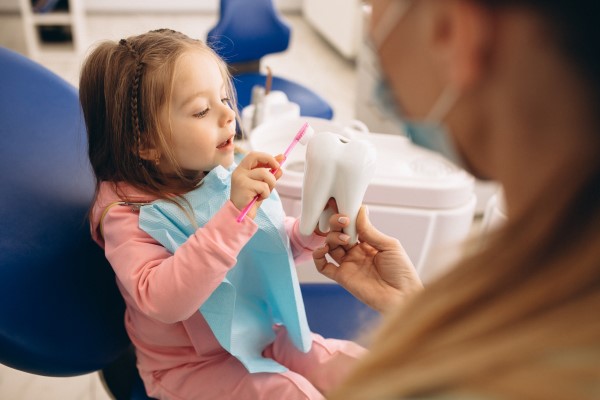
Emergency Dental Supply
Consider assembling an emergency dental kit with gauze, a tiny, lidded container, a saline solution, and your child’s dentist’s contact information. Store this kit in a convenient location.
Frequent dental exams
Preventive care requires routine dental examinations. They help spot potential issues early on. By identifying problems early, treatment can begin before they become emergencies.
Remain composed:
Remaining composed is crucial in dental emergencies for both you and your child. Your comforting words may lessen their fear.
When to Make a Dental Appointment?
While parents can act quickly to treat dental crises, they must see a dentist for expert care and advice. Dentists have the skills and information to evaluate the circumstances and administer emergency dental care. In the following situations, you ought to get in touch with a dentist:
- Even if a tooth injury seems minor, it should be examined thoroughly. This is crucial to rule out any hidden damage.
- If your child loses a tooth, act quickly to get it replaced. Immediate replacement increases the chances of saving the tooth. If this procedure is put off, problems could arise, or the tooth could fall out.
- When a tooth’s pulp is exposed due to chipping or damage, discomfort and infection could follow. Exposure to the pulp, which is the tooth’s inner layer, could cause major issues.
- Your child may have an infection or another underlying issue if they have a severe or persistent toothache.
- If anything is difficult to dislodge from your child’s teeth because it is lodged there.
- If your child’s excessive gum bleeding persists.
The Final Word
Dental crises can be terrifying, but you can deal with them effectively if you have the correct information. Being informed and prepared helps you respond effectively in these situations. With the necessary information, you can take quick action, making a significant difference in the outcome. Preparation ensures that your child’s oral health is protected. It also ensures their comfort during emergencies. Knowing what to do can prevent further complications.
