

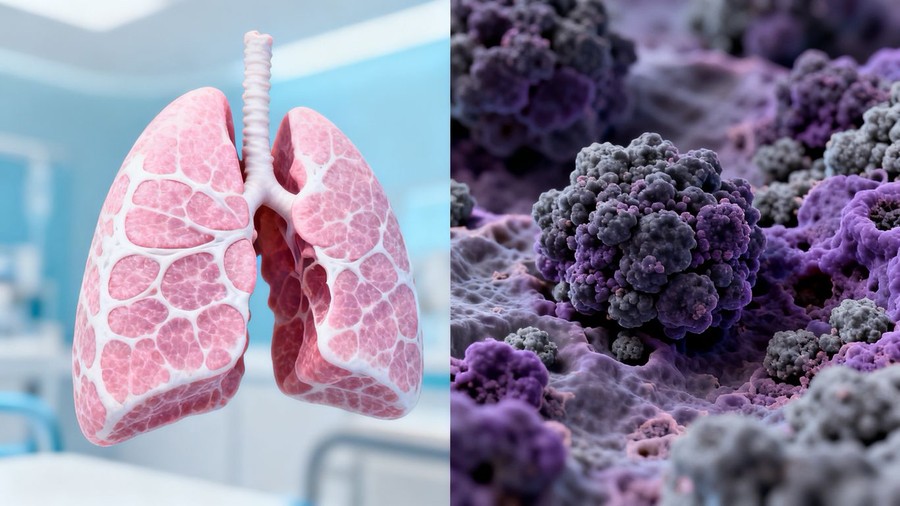
It’s easy to get lung cancer and mesothelioma mixed up, especially since they can share some symptoms and both can be linked to asbestos. However, these are distinct diseases with different origins and behaviors. Understanding these differences is key, particularly when considering legal claims related to asbestos exposure.
Defining Mesothelioma
Mesothelioma is a specific type of cancer that affects the mesothelium. This is a thin membrane that lines many of the body’s internal cavities and organs, including the lungs (pleura), abdomen (peritoneum), and heart (pericardium). The most common form, pleural mesothelioma, develops in the lining of the lungs. Mesothelioma is almost exclusively caused by exposure to asbestos fibers and the resulting cellular damage. When these fibers are inhaled or ingested, they can become lodged in the mesothelium, leading to inflammation and, over time, cancerous cell growth. It’s a relatively rare cancer, with a long latency period, meaning it can take decades after exposure for symptoms to appear.
Defining Lung Cancer
Lung cancer, on the other hand, originates within the lung tissue itself. It occurs when cells in the lungs begin to grow uncontrollably, forming tumors. While asbestos exposure is a known cause of lung cancer, it’s not the only one. Other significant risk factors include:
- Smoking (including secondhand smoke)
- Exposure to radon gas
- Air pollution
- Certain genetic factors
Lung cancer is far more common than mesothelioma. It’s typically categorized into two main types: non-small cell lung cancer (NSCLC) and small cell lung cancer (SCLC), with NSCLC being the more prevalent form.
Key Distinctions in Disease Development
The way these cancers develop and spread is a major point of difference. Lung cancer often presents as one or more distinct tumors within the lung tissue. These tumors can grow and then spread to other parts of the body, such as the lymph nodes or distant organs.
Mesothelioma, however, tends to start as multiple small tumor spots on the surface of the mesothelium. These spots can grow and merge, forming a thick layer that can encase the lung, restrict its movement, and spread to nearby tissues. This pattern of growth is quite different from the more localized tumors typically seen in lung cancer. Because mesothelioma is rarer and its development pattern is distinct, doctors often need to rule out lung cancer first during the diagnostic process.
Causes and Risk Factors
The Role of Asbestos Exposure
When discussing asbestos exposure, it’s important to understand that it’s the primary cause for mesothelioma. This type of cancer develops in the mesothelium, a protective lining that covers many internal organs, most commonly the lungs. Asbestos fibers, when inhaled, can become lodged in this lining, leading to chronic irritation and inflammation. Over many years, this can trigger the abnormal cell growth that results in mesothelioma. While other factors can contribute to lung issues, mesothelioma is almost exclusively linked to asbestos. Learning about how asbestos exposure occurs and who is at risk is an important step for those with a potential exposure history.
For lung cancer, asbestos exposure is also a significant risk factor, but it’s not the sole cause. It often works in conjunction with other factors, particularly smoking. Individuals who have a history of asbestos exposure and also smoke face a substantially higher risk of developing lung cancer compared to those who only smoke or only have asbestos exposure.
Occupational settings have historically been the main source of significant asbestos exposure. Workers in industries such as construction, shipbuilding, manufacturing, and automotive repair were frequently exposed to asbestos-containing materials. Even family members of these workers could be at risk through secondary exposure, where asbestos fibers were carried home on clothing or hair.
Other Contributing Factors for Lung Cancer
Lung cancer, unlike mesothelioma, can arise from a variety of sources. Smoking tobacco is by far the leading cause, responsible for the vast majority of lung cancer cases. The chemicals in cigarette smoke damage the cells lining the lungs, leading to mutations that can cause cancer to develop. Secondhand smoke also significantly increases the risk for non-smokers.
Beyond smoking and asbestos, other environmental factors can play a role:
- Radon Gas: This naturally occurring radioactive gas can seep into buildings from the ground. Prolonged exposure to elevated levels of radon in homes or workplaces is a known risk factor for lung cancer.
- Air Pollution: Exposure to pollutants in the air, such as those from vehicle exhaust and industrial emissions, can also contribute to the development of lung cancer over time.
- Genetics and Family History: A family history of lung cancer, especially in a first-degree relative, can increase an individual’s susceptibility. Certain inherited genetic mutations may also play a part.
Latency Periods for Each Disease
One of the most challenging aspects of asbestos-related diseases is the long period between exposure and the onset of symptoms. This is known as the latency period.
- Mesothelioma: The latency period for mesothelioma is typically very long, often ranging from 20 to 50 years, and sometimes even longer, after the initial asbestos exposure. This extended timeframe means that individuals may have had asbestos exposure decades before they receive a diagnosis.
- Lung Cancer (Asbestos-Related): While lung cancer caused or aggravated by asbestos exposure also has a significant latency period, it can sometimes be shorter than that for mesothelioma. However, it still commonly takes many years, often 15 to 30 years or more, for lung cancer to develop after asbestos exposure.
It’s important to note that the latency period can be influenced by the intensity and duration of asbestos exposure, as well as whether other risk factors like smoking are present. The prolonged latency is a key reason why these diseases are often diagnosed at advanced stages.
Diagnostic Processes and Challenges
Initial Diagnostic Steps
Getting a correct diagnosis for either lung cancer or mesothelioma can be a complex journey. Often, the initial symptoms, like shortness of breath or a persistent cough, are quite similar for both conditions and can even mimic less serious ailments. This overlap means that simply presenting with symptoms isn’t enough for a definitive answer. Doctors typically start with a thorough physical examination and then move on to imaging tests. These can include standard X-rays, but more detailed views are usually obtained with CT scans or PET scans. These scans help visualize any abnormalities in the chest, such as tumors or fluid buildup, but they generally cannot distinguish between lung cancer and mesothelioma on their own. For more information on what to expect, this information aims to clarify the diagnostic journey.
The Importance of Biopsies
Because imaging alone is insufficient, a biopsy is almost always required to confirm a diagnosis and determine the specific type of cancer. This involves obtaining a small sample of tissue from the suspicious area. Several methods can be used for this:
- Bronchoscopy: A thin, flexible tube with a camera is inserted into the airways to visualize and potentially collect tissue samples.
- Needle Biopsy: A needle is guided into the tumor, often with the help of imaging like ultrasound or CT scans, to extract cells or tissue.
- Surgical Biopsy: This can range from minimally invasive procedures like thoracoscopy (where a small scope is inserted into the chest cavity) to more open surgeries, depending on the location and size of the suspected tumor.
The histological examination of this tissue under a microscope is the gold standard for differentiating between various cancers. Understanding the symptoms and diagnostic process for asbestos-related diseases is important for ensuring an accurate diagnosis.
Distinguishing Between Cell Types
Once a biopsy sample is obtained, pathologists examine the cells to identify their origin and type. Lung cancer is an umbrella term for cancers that begin in the lungs, with the most common types being non-small cell lung cancer (NSCLC) and small cell lung cancer (SCLC). Mesothelioma, on the other hand, is a cancer that develops in the lining of the lungs (pleura), abdomen (peritoneum), or heart (pericardium), and it originates from mesothelial cells. The microscopic appearance of these cells is fundamentally different, which is key to distinguishing them. Advanced laboratory techniques and molecular testing may also be employed to further refine the diagnosis, especially in ambiguous cases. Research is ongoing into new diagnostic markers, such as specific proteins in the blood or pleural fluid, that could help differentiate these conditions more easily in the future.
Potential for Misdiagnosis
Given the overlapping symptoms and the need for specialized examination of biopsy samples, misdiagnosis is a real concern. A case reported in Radiology Case Reports, for instance, involved a patient initially suspected of having mesothelioma based on imaging and history, but a biopsy later revealed lung cancer. This highlights why a definitive biopsy and expert pathological review are so critical. Misidentifying mesothelioma as lung cancer, or vice versa, can have significant consequences for treatment planning and prognosis. For example, treatment approaches for mesothelioma, such as surgery, chemotherapy, and immunotherapy, differ from those for lung cancer, although both often involve multimodal therapy. Understanding the specific diagnosis is also vital for pursuing appropriate legal claims, particularly when asbestos exposure is involved, as mesothelioma treatment options are tailored to its unique development.
Prognosis and Treatment Considerations
The outlook for individuals diagnosed with either lung cancer or mesothelioma can vary significantly, and treatment plans are tailored to the specific type of cancer, its stage, and the patient’s overall health. While both are serious conditions, understanding the differences in prognosis and treatment is key.
Variability in Prognosis
Mesothelioma, a cancer that originates in the lining of the lungs (pleura), often presents a more challenging prognosis compared to lung cancer. This is partly due to its typically later diagnosis and its tendency to spread more diffusely within the chest cavity. The average life expectancy for asbestos-related lung cancer is around 16.2 months, but this can differ greatly based on individual factors. The specific cell type and the extent to which the cancer has spread are major determinants of survival. Factors such as age at diagnosis, the presence of other health issues, and how well the cancer responds to treatment all play a role in an individual’s outlook.
Treatment Modalities
Treatment approaches for both lung cancer and mesothelioma often involve a combination of therapies, known as multimodal therapy. The goal is to manage the disease, alleviate symptoms, and improve quality of life.
Common treatment options include:
- Surgery: If detected early, surgical removal of tumors may be an option. For lung cancer, this might involve removing a lobe of the lung (lobectomy). Mesothelioma surgery can be more complex, sometimes involving the removal of the lung’s lining (pleurectomy and decortication).
- Chemotherapy: These drugs are administered to target and destroy cancer cells throughout the body.
- Radiation Therapy: This uses high-energy rays to kill cancer cells and can help shrink tumors.
- Immunotherapy: A newer approach that helps the body’s own immune system fight the cancer.
- Targeted Therapy: These medications focus on specific abnormalities within cancer cells and often have fewer side effects than traditional chemotherapy.
- Palliative Care: Focused on symptom relief and improving the patient’s quality of life, this can be a primary treatment or used alongside other therapies at any stage of the disease.
Impact of Cell Type on Outcomes
The specific type of cancer cell involved significantly influences treatment effectiveness and prognosis. For instance, while radiation therapy can be effective for both, studies suggest it might be slightly less effective for recurring lung cancer compared to recurring mesothelioma. Mesothelioma is often treated with surgery, chemotherapy, and radiation, while lung cancer treatments are similarly varied but may differ in their specific application based on cell type, such as non-small cell lung cancer or small cell lung cancer. A lung cancer specialist is best equipped to determine an individual’s prognosis after a thorough evaluation.
It’s important for patients to discuss all available treatment options with their medical team to create a personalized plan that best suits their unique situation. Information about asbestos-related lung cancer treatment and legal resources can help patients and families plan comprehensively.
Legal Implications and Compensation Pathways
When dealing with a diagnosis like mesothelioma or lung cancer, especially when asbestos exposure is a factor, understanding your legal options and how to get compensation is a big part of moving forward. It’s not just about the medical side of things; there’s a financial aspect that can help cover costs and support your family. Reviewing asbestos-related health conditions and compensation options can help you evaluate your eligibility.
Eligibility for Compensation
Generally, if your lung cancer or mesothelioma is linked to asbestos exposure, you may be able to seek compensation. The key is proving that exposure happened and that it caused your illness. This often involves looking at your work history and any potential exposure sites. For mesothelioma, the link to asbestos is very direct, which can sometimes make the eligibility process more straightforward. Lung cancer, however, can be more complicated if other factors, like smoking, also played a role. Proving the asbestos connection is the most important step for any claim.
Asbestos Trust Funds
Many companies that used asbestos have set up asbestos trust funds. These funds were created to compensate people who were harmed by asbestos exposure. There’s a significant amount of money available across these trusts, often totaling billions of dollars. To access these funds, you typically need to file a claim with the specific trust associated with the company you worked for or were exposed to. The amount you might receive can depend on several things:
- The type of illness: Mesothelioma claims often result in higher payouts because the disease is almost always caused by asbestos.
- Medical expenses: Costs for treatment, medication, and ongoing care.
- Lost income: Wages you’ve lost because you can no longer work.
- Severity of exposure: How much and for how long you were exposed to asbestos.
Navigating Legal Claims
Filing a claim, whether through a trust fund or a lawsuit, can be complex. Resources covering asbestos-related cancers and legal options can help you understand the process. It requires gathering a lot of documentation, like medical records, work history details, and evidence of asbestos exposure. Because of the specific rules and procedures involved, working with an attorney who has experience with asbestos-related illnesses is highly recommended. They can help you understand the process, gather the necessary evidence, and present your case effectively to increase your chances of receiving fair compensation.
Seeking Legal Counsel for Asbestos-Related Illnesses
When facing a diagnosis like mesothelioma or asbestos-related lung cancer, the path forward can feel overwhelming. Beyond the immediate health concerns, there are significant legal and financial considerations, especially when asbestos exposure is identified as the cause. Securing experienced legal representation is a critical step in pursuing rightful compensation. Asbestos claims are distinct from typical personal injury cases, often involving complex legal histories and specific evidentiary requirements. An attorney specializing in these matters can make a substantial difference in the outcome of your claim.
The Role of Experienced Attorneys
Attorneys with a background in asbestos litigation possess a specialized knowledge base. They understand the nuances of how asbestos exposure occurs, the companies responsible, and the legal avenues available for compensation. This includes:
- Investigating the full extent and source of your asbestos exposure, which may involve uncovering details you were not aware of.
- Identifying the correct defendants, which can include manufacturers, suppliers, and employers who contributed to your exposure.
- Gathering and presenting the necessary documentation, such as medical records, work history, and evidence of asbestos product use.
These professionals are adept at dealing with large corporations and their legal teams, who may attempt to minimize liability. They can also help clarify if your condition might be eligible for asbestos trust funds, a common route for compensation when companies have gone bankrupt.
Tailored Legal Strategies
Each asbestos-related illness case is unique. An experienced attorney will develop a strategy tailored to your specific situation. This involves:
- Accurately assessing your diagnosis: Differentiating between mesothelioma and other asbestos-related lung cancers is vital, as compensation pathways can differ.
- Determining the most appropriate legal action, whether it’s filing a claim with an asbestos trust, pursuing a lawsuit, or seeking veterans’ benefits if applicable.
- Anticipating and addressing potential challenges, such as proving causation or dealing with statute of limitations issues.
Their goal is to build the strongest possible case to support your claim for damages, which can help cover medical expenses, lost wages, and other related costs.
Maximizing Compensation Potential
The ultimate aim of seeking legal counsel is to obtain fair compensation for the harm caused by asbestos exposure. Attorneys experienced in this field know how to value claims effectively and negotiate with insurance companies or trust administrators. They work to ensure that all eligible compensation sources are explored and that you receive the maximum amount possible. This might involve:
- Negotiating settlements that reflect the full impact of your illness.
- Representing you in court if a settlement cannot be reached.
- Assisting with claims for benefits you may be entitled to, such as through the Department of Veterans Affairs.
Their involvement can significantly improve your chances of a successful outcome and provide peace of mind during a difficult time.
